|
|
Illustrated Classics
|
© Bart Bethlehem |
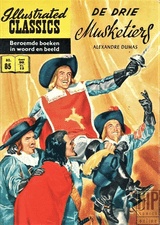
The Illustrated Classics are one of the first and longest-running publications of Classics Netherlands. The series ran even longer here than in America, where 169 parts were published. The Dutch 214-part series ran from 1956 to 1976. For the true collector, there are many more copies to collect since the series has various reprints and formats (Top Illustrated Classics, etc).
Here is an overview of all the issues in the Classics Illustrated series.
Check out the Gallery with all the great covers of the Classics Illustrated series.
In the Illustrated Classics series, one can find famous names like Shakespeare, Homer, Dumas, Schiller, Zola, Dickens, and Wilde. It also includes lesser-known figures such as James Fenimore Cooper, H.G. Wells, Jules Verne, and H. Rider Haggard, alongside relatively unknown authors like Emerson Hough, Francis Parkman, Charles Hawes, Bret Harte, and Ann Stephans.
The fact that the Illustrated Classics originate from America has led to a significant overrepresentation of American authors. Therefore, the selection from world literature is far from objective or representative.
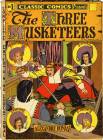
The first American edition, 'The Three Musketeers,' was published in 1941 in the series then known as Classic Comics. In 1947, the name was changed to Classics Illustrated.
The original covers featured line drawings. In 1951, they transitioned to painted covers. The earlier issues also received new painted covers.
ACTION - SENSATION - EXCITEMENT... but Wholesome!

Illustrated Classics had its origins in the United States, founded by Albert Kanter, a publisher of medical books. His concern stemmed from the fact that his children exclusively read comics and avoided more 'serious' literature. He aimed to provide a positive alternative in response to the inundation of the American market with what he considered to be worthless comic books.
To promote Illustrated Classics and secure a dedicated readership, explanatory notes were attached to the back of complimentary copies (#18, #19, #20, #21) distributed in Dutch schools.
"It is the sincere hope of the publishers that Illustrated Classics will arouse readers' interest in the original works."
Comics were under a cloud in the 1950s. This moralistic perspective aimed to make comics more acceptable within the conservative Calvinistic society.
The first 139 issues of Dutch Illustrated Classics were direct translations of the American originals. However, in 1962, after 167 issues, publisher Gilberton decided to halt American production. The rights to Classics were transferred to Twin Circle, which continued to reissue many titles. In 1969, two additional issues were released, but in 1972, the reprinting of the Classics Illustrated series came to a definitive end.
In the Netherlands, publication continued until issue 214 in 1976. The newer, non-American issues were primarily of English origin and exhibited a declining quality, both in terms of content and illustrations. Authors were often omitted from the cover credits.
Lambiek.nl, Nederlandse stripgeschiedenis, 1960-1970
Stripschrift nr. 193/194 (maart/april 1985)
Tontjes Online Classics Katalogus (discontinued)
Many thanks go out to:
Willem Hageman from the former "De Boekenhalte" in Zwolle for enabling me to scan many of his covers.
Jan Vijfer, owner of Balloon Express for borrowing out some covers.
|
|
The Legal Stuff: All pictures, logos and characters are Trademarks of their respective owners and are used without permission. Use of said trade marks, characters and logos does not constitute a violation of statutory rights, since they are not used for commercial purposes. Users of this site are requested to respect this tenet.
|